
 enEnglisch

Single-phase vs. three-phase systems
Comparison of different encapsulation and system designs for pressurized air cables in medium- and high-voltage networks
Different approaches to modern electricity grids
Einphasige single-phase and three-phase pressurized air cables are based on the same technology, but differ in terms of design, space requirements and scope of application.
Depending on the network requirements, one system configuration or the other may offer advantages. This comparison highlights the key differences and potential applications of both concepts.
The demands placed on modern electricity grids are becoming increasingly diverse
With the expansion of renewable energy, increasing electrification and rising power demand, the demands placed on modern transmission grids are growing. In addition to transmission capacity and security of supply, factors such as space requirements, infrastructure integration and operational efficiency are also becoming increasingly important.
Pressurized air cables can be designed as either single-phase or three-phase systems. Both concepts are based on the same technology, but differ in terms of design, space requirements, magnetic field behaviour and scope of application.
This comparison highlights the key differences between single-phase and three-phase pressurized air cable systems and explains which applications each system concept is particularly suited to.
The key differences at a glance
High transmission capacity
Suitable for demanding applications in medium- and high-voltage networks.
Optimised space requirements
Depending on the project requirements, flexible or particularly compact system designs are available.
Reduced magnetic fields
Metal shielding and an optimised conductor layout minimise electromagnetic emissions.
Flexible infrastructure integration
Suitable for installation in protective conduits, micro-tunnels and walk-in cable tunnels, safety galleries and utility ducts.
What are single-phase systems?
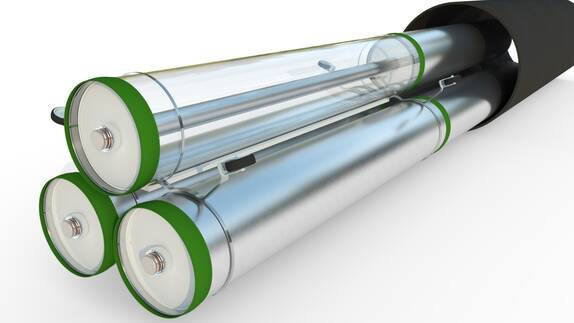
In single-phase pressurized air cable systems, each phase is routed through its own metal casing.
For a complete three-phase system, three separate pressurized air cables are therefore installed, with each phase in its own enclosure.
This design offers maximum conductor cross-sections and therefore enables very high transmission capacities. The rotational symmetry, combined with the Hivoduct flange design, allows for maximum flexibility across all layouts. Single-phase systems are particularly suitable for the highest performance requirements and maximum flexibility in complex arrangements.

What are three-phase systems?

In three-phase compressed air cable systems, all three phase conductors of a three-phase system are housed within a single metal casing. The phase conductors are designed with an optimised elliptical shape for this purpose.
The compact design significantly reduces the space required. At the same time, the magnetic fields of the individual phases largely cancel each other out.
Three-phase systems are particularly suitable for applications with limited space and straight installations with few bends. They allow for efficient integration into protective conduits, microtunnels or existing infrastructure corridors.
Infrastructure and space requirements
Different Concepts for Different Requirements
Single-phase and three-phase pressurized air cable systems follow different design approaches in terms of construction and space requirements.
In single-phase systems, each phase is installed within its own metallic enclosure. As a result, three separate pipe systems together form the three-phase transmission system.
Three-phase systems integrate all three conductors within a common enclosure. This enables a particularly compact design and significantly reduces the space required along the route.
Compact Solutions for Space-Constrained Environments
Available space is a critical factor in many infrastructure projects.
Three-phase systems offer advantages when:
- Protective ducts are required
- Tunnel cross-sections are limited
- Integration into urban infrastructure is necessary
- Cable routes need to be designed as compactly as possible
Single-phase systems require more space but provide exceptional flexibility for complex three-dimensional layouts.
Typical Applications
Single-Phase Systems
- Highest power transmission capacities
- Short, complex connections within substations
Three-Phase Systems
- Long, predominantly straight connections
- Space-constrained installations
- Protective ducts and microtunnels
- Accessible cable tunnels
- Urban infrastructure projects
Single-phase systems provide maximum flexibility in system design and power transmission capability. In contrast, three-phase systems enable particularly compact, space-efficient integration into existing infrastructure.
Transmission Capacity
High Power Transmission for Modern Power Grids
Both single-phase and three-phase pressurized air cable systems are based on the same technology and enable very high transmission capacities for medium- and high-voltage applications thanks to their large conductor cross-sections.
The choice of system concept therefore depends less on fundamental transmission performance and more on the requirements regarding space, infrastructure, and grid integration.
Maximum Flexibility or Maximum Compactness
Single-phase systems carry each phase within its own enclosure. This allows the layout and conductor routing to be individually adapted to the requirements of a project.
Three-phase systems integrate all three conductors within a common enclosure, enabling a particularly compact design while maintaining high transmission capacity.
High-Performance Solutions for Different Applications
Single-Phase Systems
- Maximum flexibility in system design
- Suitable for the highest transmission capacity requirements
- Variable arrangement of the three phases
- Typical for complex high-voltage applications
Three-Phase Systems
- High transmission capacity with minimal space requirements
- Compact infrastructure
- Efficient integration into existing routes
- Particularly suitable for urban applications and tunnel infrastructure
Both single-phase and three-phase pressurized air cable systems enable high transmission capacities. While single-phase systems offer maximum flexibility in system design, three-phase systems stand out through their compact construction and efficient use of space.
Magnetic fields
Natural Field Compensation Through Conductor Arrangement
Current-carrying conductors generate magnetic fields whose strength depends on the current level, conductor arrangement, and distance from the transmission line.
Both single-phase and three-phase pressurized air cable systems benefit from the thick-walled metallic aluminium enclosure, which is grounded at multiple points, completely shields electric fields, and significantly reduces magnetic fields.
Differences Between the System Concepts
In single-phase systems, each phase is carried within its own enclosure. Magnetic field reduction is achieved through the induced enclosure current flowing in the opposite direction.
In three-phase systems, all three conductors are located within the same enclosure. As a result, the magnetic fields of the individual phases largely compensate each other by design. Additional magnetic field reduction is achieved through the induced enclosure current flowing in the opposite direction.
Advantages of Three-Phase Systems
The close arrangement of the three phases within a common enclosure provides several advantages:
- Natural compensation of magnetic fields
- Lower external magnetic field emissions
- Compact design
- Suitable for sensitive infrastructure environments
- High electromagnetic compatibility
Advantages of Single-Phase Systems
Single-phase systems also exhibit very low external fields due to their metallic enclosure.
In addition, they allow flexible arrangement of the individual phases and can be optimally adapted to the requirements of a project.
Both system concepts enable power transmission with very low electromagnetic emissions. Three-phase systems additionally benefit from natural field compensation within the common enclosure.
Installation and grid integration
Flexible Solutions for Different Infrastructure Projects
The requirements for modern energy infrastructure vary considerably depending on the application. Factors such as available space, route alignment, tunnel structures, or existing protective ducts influence the choice of the most suitable system concept.
Single-phase and three-phase pressurized air cable systems offer different advantages in this regard.
Single-Phase Systems
Due to the separate arrangement of each phase, single-phase systems can be adapted particularly flexibly to project-specific requirements.
Advantages:
- Individual design of each phase
- High flexibility in route alignment
- Suitable for the highest transmission capacity requirements
- Easier adaptation to complex infrastructure projects
Single-phase systems are frequently used where maximum transmission capacity and flexibility are the primary considerations.
Three-Phase Systems
Three-phase systems integrate all three conductors within a common enclosure. This results in a particularly compact solution that is ideally suited for space-constrained environments.
Advantages:
- Very low space requirements
- Compact route design
- Efficient use of existing protective ducts
- Suitable for tunnel and infrastructure projects
- Simplified integration into urban environments
Use of Existing Infrastructure
Both single-phase and three-phase pressurized air cable systems can be installed in:
- Protective ducts
- Microtunnels
- Cable ducts
- Accessible cable tunnels
The choice of system concept depends on the available space and the transmission capacity requirements of the respective project.
Single-phase systems provide maximum flexibility in planning and design. Three-phase systems enable particularly compact integration into existing infrastructure and are ideally suited for applications with limited available space.
Conclusion
Which System Is the Right Choice?
Single-phase and three-phase pressurized air cable systems are based on the same technology and offer the benefits of air-insulated, fully metallically enclosed power transmission.
Both concepts enable high transmission capacities, low electromagnetic emissions, and flexible integration into modern energy infrastructure.
The key difference lies in the system architecture: while single-phase systems provide maximum flexibility and performance, three-phase systems stand out through their compact design and minimal space requirements.
Single-Phase Systems Are Particularly Suitable For:
- Highest transmission capacities
- Short connections with complex layouts
- Individually optimized grid projects
- Medium- to extra-high-voltage applications
- Maximum flexibility in system design
Three-Phase Systems Are Particularly Suitable For:
- Long, predominantly straight connections
- Limited space conditions
- Protective ducts and microtunnels
- Accessible cable tunnels
- Urban infrastructure
- Industrial and energy facilities
- Compact route alignments
Final Remarks
Single-phase and three-phase pressurized air cable systems follow different system approaches while offering the same technological advantages. The optimal solution depends on the specific requirements of each project and enables powerful, efficient, and future-ready power transmission.
T Technical Documents
Factsheets and technical documents
Frequently asked questions (FAQ)
What is a single-phase pressurized air cable?
What is a three-phase pressurized air cable?
Which solution requires less space?
Which solution offers higher transmission capacity?
How do the magnetic fields differ?
For which voltage levels are single-phase systems suitable?
For which voltage levels are three-phase systems suitable?
Can both systems be installed in tunnels?
Which solution is better suited for urban infrastructure?
Which system configuration is the right choice?
Do You Have Questions About Pressurized Air Cables?
Technical information, factsheets, and expert support for medium- and high-voltage projects — directly from the source.